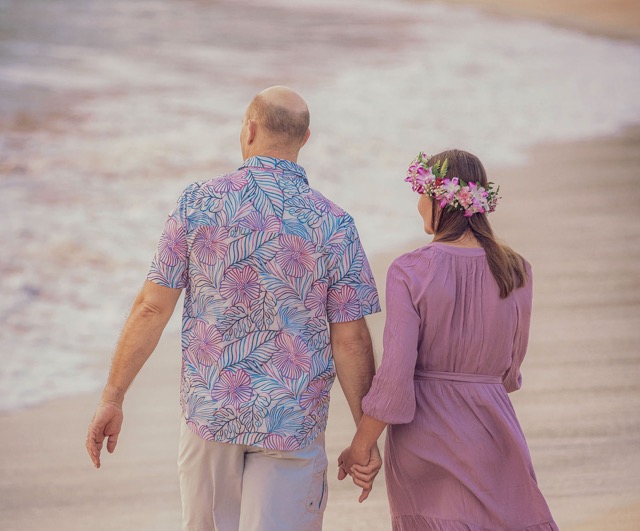
May 1st, known as May day in different parts of the world, is known as Lei Day on Maui and the other Hawaiian islands. This special day celebrates a treasured Hawaiian custom– the giving and receiving of lei.
This custom, first begun in 1928, has continued ever since. But what makes lei so special? And what is their meaning? Let's find out together!
A lei is a garland made of flowers, leaves, seeds, and other materials. In Hawaii, it's more than just pretty flowers tied together with string. In fact, different flowers have different meanings, and some lei were reserved only for the ali'i (the ruling class).
What hasn't changed is that they are tangible expressions of aloha (Find out what that means here!) and are given to express everything from gratitude to sympathy to congratulations.
They're commonly seen at graduations, birthday parties, and any type of celebration!
Each Hawaiian island has a special flower associated with it. On Maui, our island's flower is the Lokelani rose. These small pink blossoms have delicate petals, crinkled like delicate crepe.
The Lokelani rose is sometimes called the "rose of heaven." Symbolically, it means love, affection, and represents Maui's beauty. It's fragrant and has become a typical scent in perfumes, skincare products, and is even edible.
The main Lei Day festival on Maui takes place at the Maui Museum. This year it will take place on Thursday from 10:00 am to 3:00 pm. There will be interactive displays, cultural exhibits, and other special events. Check out their website to see the winners of last year's Lei festival!
On a more personal level, the most common way to celebrate Lei Day is through the giving and receiving of leis. Representing friendship, love, respect, and aloha lei symbolise many wonderful things.
Making a lei is fairly simple. You either need to string flowers onto a thread or weave them onto a base.
Some of the easiest flowers to start with are plumeria flowers. Simply string them together and tie a knot where you want the lei to end. This style of lei is known as kui- when it's a single strand lei.
Plumerias are fragrant, and wearing a plumeria lei is like walking around in the most wonderful of perfumes.
Orchids, Hibiscus, and Jasmine (pikake) are also all great choices. Ti leaves and ferns are commonly used for greenery.
Some other common forms of lei are haku, which involves weaving flowers and leaves into a braid, and wili, when the items are twisted together.
Raffia is often used for the base– a natural fiber made from the leaves of a particular palm tree.
Leis do vary in their complexity, and if you want to learn how to make a more complex one, we highly recommend taking a class, like this one offered by Haku Maui.
And if your class is run by a Native Hawaiian, that's even better!
